
Afire—Wildfire Detection &
Monitoring from Space
Concept / Product Design / Hyper Island Final Project / 2021
About this project
Afire is a conceptual/fictional project that aims to visualize a connected
environment and shows how you could tackle forest fire emergency
response in a more efficient and interconnected way.
Why did I choose a serious topic like that? Throughout my life, I have been
confronted with forest fires. It all started with a photo from my grandfather
from a bushfire in Australia, around 1965 and continued with some bushfires
I saw by myself in the Australian Outback. I was fascinated by the huge wall
of smoke that rose into the sky. At the same time, I was very worried about
the fate of humans as well as animals and the destruction and impact on the
climate.
To make the fight against forest fires more efficient, time plays a crucial role.
My main focus was to reduce time in every aspect and connect different
areas to be faster in the emergency response, which will result hopefully in
less damage to the environment.
Afire—Wildfire Detection
& Monitoring from Space
Concept / Product Design / Hyper Island Final Project / 2021
About this project
Afire is a conceptual/fictional project that aims to visualize a connected
environment and shows how you could tackle forest fire emergency
response in a more efficient and interconnected way.
Why did I choose a serious topic like that? Throughout my life, I have been
confronted with forest fires. It all started with a photo from my grandfather
from a bushfire in Australia, around 1965 and continued with some bushfires
I saw by myself in the Australian Outback. I was fascinated by the huge wall
of smoke that rose into the sky. At the same time, I was very worried about
the fate of humans as well as animals and the destruction and impact on the
climate.
To make the fight against forest fires more efficient, time plays a crucial role.
My main focus was to reduce time in every aspect and connect different
areas to be faster in the emergency response, which will result hopefully in
less damage to the environment.
Afire—Wildfire
Detection & Monitoring from Space
Concept / Product Design / Hyper Island Final Project / 2021
About this project
Afire is a conceptual/fictional project that aims to visualize a connected
environment and shows how you could tackle forest fire emergency
response in a more efficient and interconnected way.
Why did I choose a serious topic like that? Throughout my life, I have been
confronted with forest fires. It all started with a photo from my grandfather
from a bushfire in Australia, around 1965 and continued with some bushfires
I saw by myself in the Australian Outback. I was fascinated by the huge wall
of smoke that rose into the sky. At the same time, I was very worried about
the fate of humans as well as animals and the destruction and impact on the
climate.
To make the fight against forest fires more efficient, time plays a crucial role.
My main focus was to reduce time in every aspect and connect different
areas to be faster in the emergency response, which will result hopefully in
less damage to the environment.
Afire—Wildfire
Detection &
Monitoring from
Space
Concept / Hyper Island Final Project / 2021
About this project
Afire is a conceptual/fictional project that aims to visualize a connected
environment and shows how you could tackle forest fire emergency
response in a more efficient and interconnected way.
Why did I choose a serious topic like that? Throughout my life, I have been
confronted with forest fires. It all started with a photo from my grandfather
from a bushfire in Australia, around 1965 and continued with some bushfires
I saw by myself in the Australian Outback. I was fascinated by the huge wall
of smoke that rose into the sky. At the same time, I was very worried about
the fate of humans as well as animals and the destruction and impact on the
climate.
To make the fight against forest fires more efficient, time plays a crucial role.
My main focus was to reduce time in every aspect and connect different
areas to be faster in the emergency response, which will result hopefully in
less damage to the environment.
Afire – Wildfire
Detection &
Monitoring from
Space
Concept / Product Design / Hyper Island Final Project / 2021
About this project
Afire is a conceptual/fictional project that aims to visualize a connected environment and shows how you could tackle forest fire emergency
response in a more efficient and interconnected way.
Why did I choose a serious topic like that Throughout my life, I have been confronted with forest fires. It all started with a photo from my grandfather from a bushfire in Australia, around 1965 and continued with some bushfires
I saw by myself in the Australian Outback. I was fascinated by the huge wall of smoke that rose into the sky. At the same time, I was very worried about the fate of humans as well as animals and the destruction and impact on the climate.
To make the fight against forest fires more efficient, time plays a crucial role. My main focus was to reduce time in every aspect and connect different areas to be faster in the emergency response, which will result hopefully in less damage to the environment.



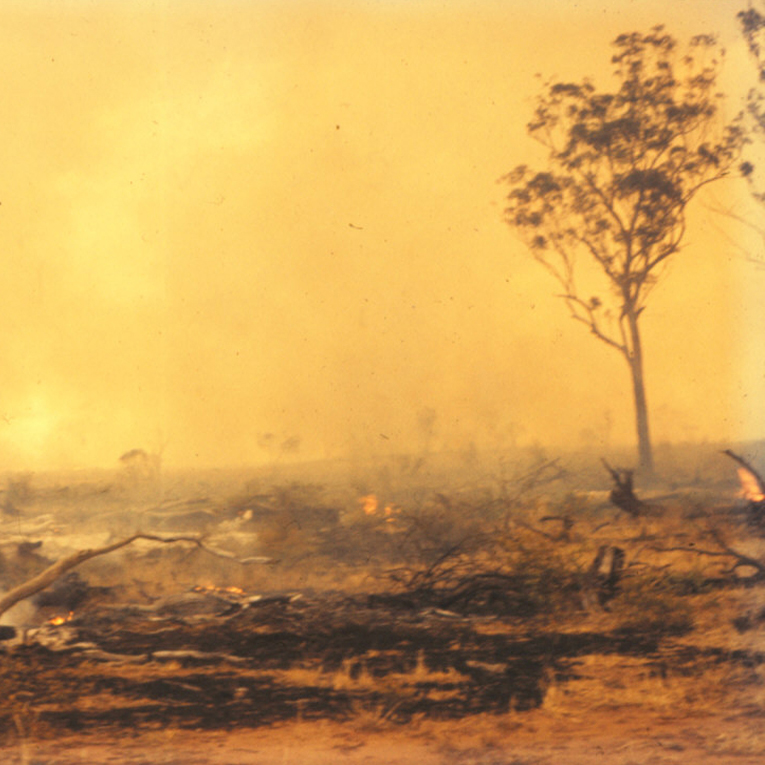
Grandfather Josef Habenbacher, 1965, Australia
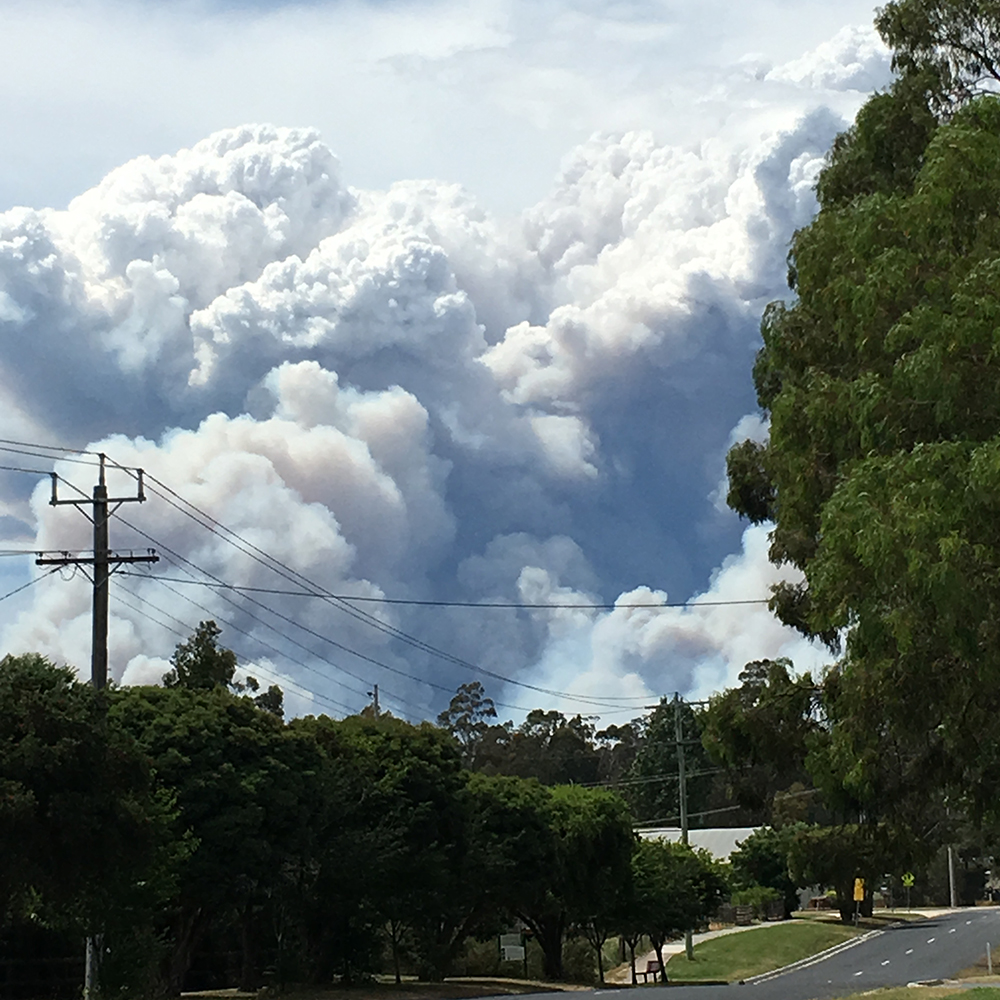
Benjamin Gabernig, December 2017, Australia
The Challenge
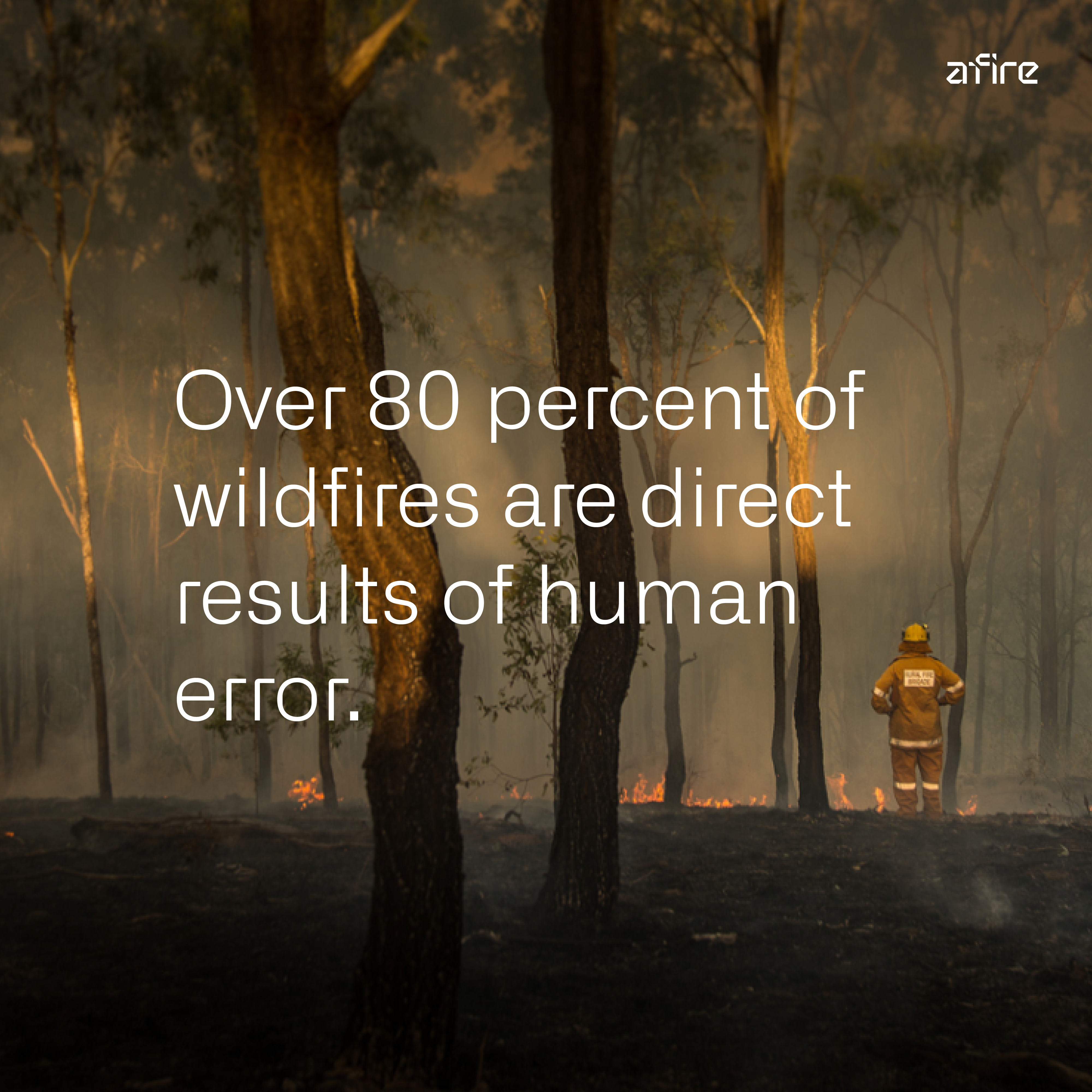
Due to climate change, forest fires are more frequent and greater devastation occurs. The overall challenge is that the emergency response needs to be as fast as possible because, at an early stage, a forest fire is easier to handle. Once it becomes big, it's getting harder, even impossible sometimes.
All started with the following question:
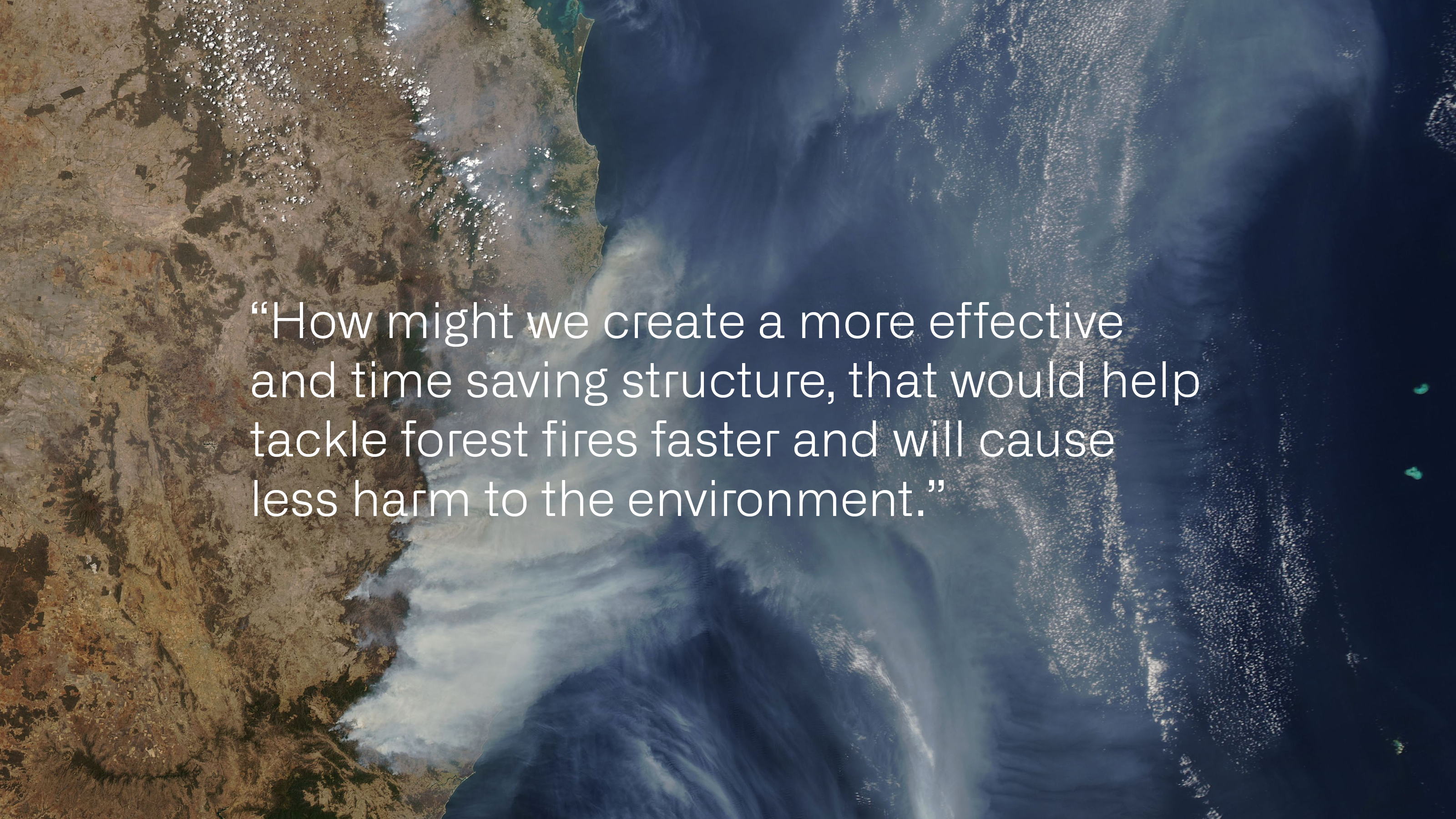
With this question in mind, I tried to ideate and find out through interviews, how I could redesign the current experience and implement today's technology to support a faster and more informed reaction.
Please be aware that the following is only a rough concept and a visualisation that just showcases what could be possible. I haven’t thought a lot about every single detail, it’s more about an overall concept.
Planning
I started out by planning my time. My goal was to be done with everything in a 10 day design sprint. Because having a short amount of time will force you to make quick decisions and overall be more efficient. I created milestones for each day and an overall goal. Preparing and planning the project is very important. Like Benjamin Franklin once said:
“By failing to prepare, you are preparing to fail.”

Research
After planning the overall structure for the project, I made a research plan. My main interest was to find out as much as possible about the current experience of forest fire emergency response.
The best way forward was doing desktop research and interviews.
I have chosen interviews because it is quite a complex area. Interviews would allow me to ask follow-up questions if I wasn’t sure about something. I prepared open questions to influence my participants as little as possible.
Interviews
I reached out to 11 people working on fighting forest fires in Australia over Linkedin. The professions ranged from “Deputy Chief Fire Officer” to “Forest & Fire Operations Officer”. Unfortunately I only had the chance to talk to 2 of them each 35 min. It was very insightful and I decided to move forward even though I still had a lot of assumptions.
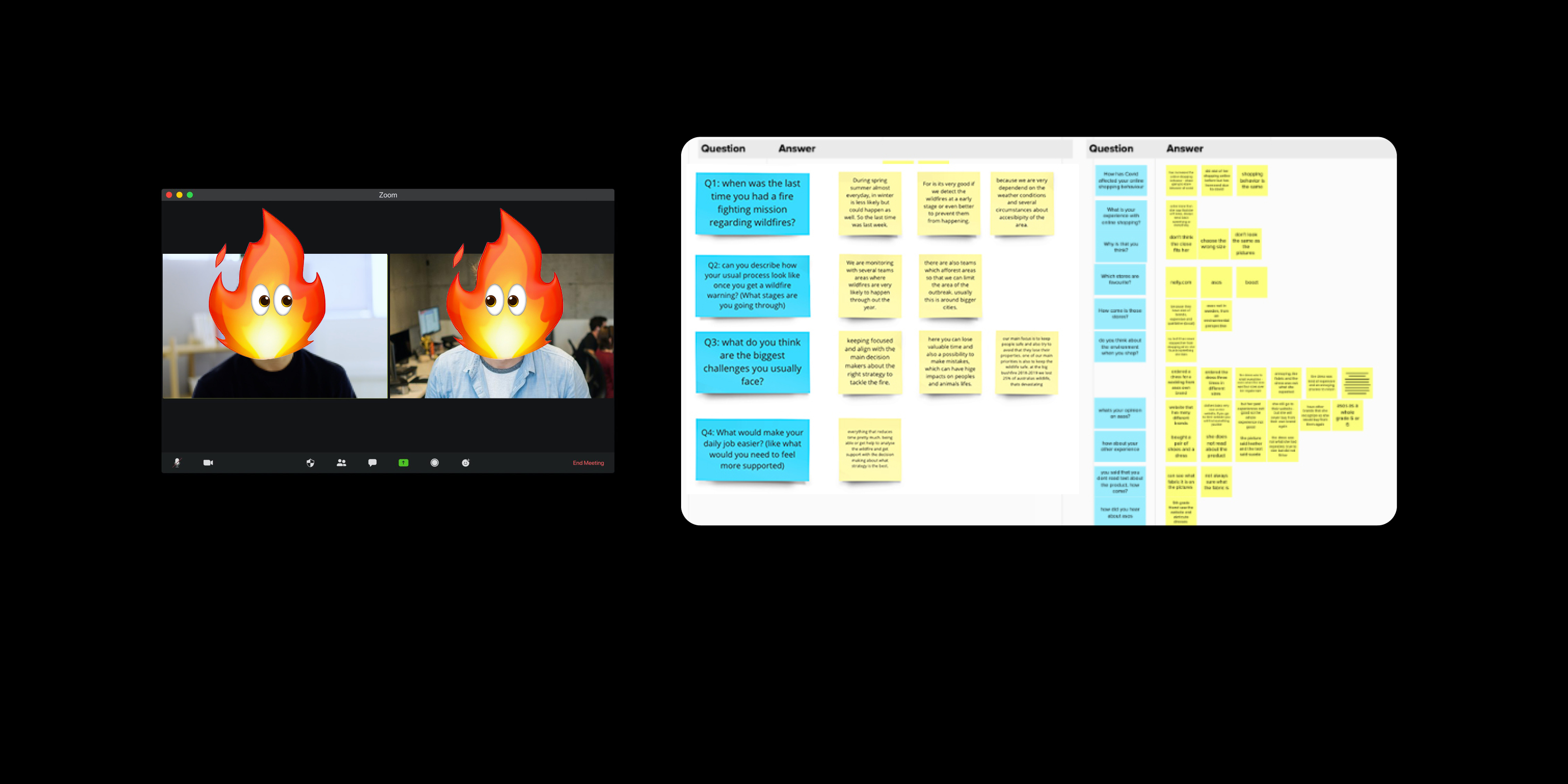
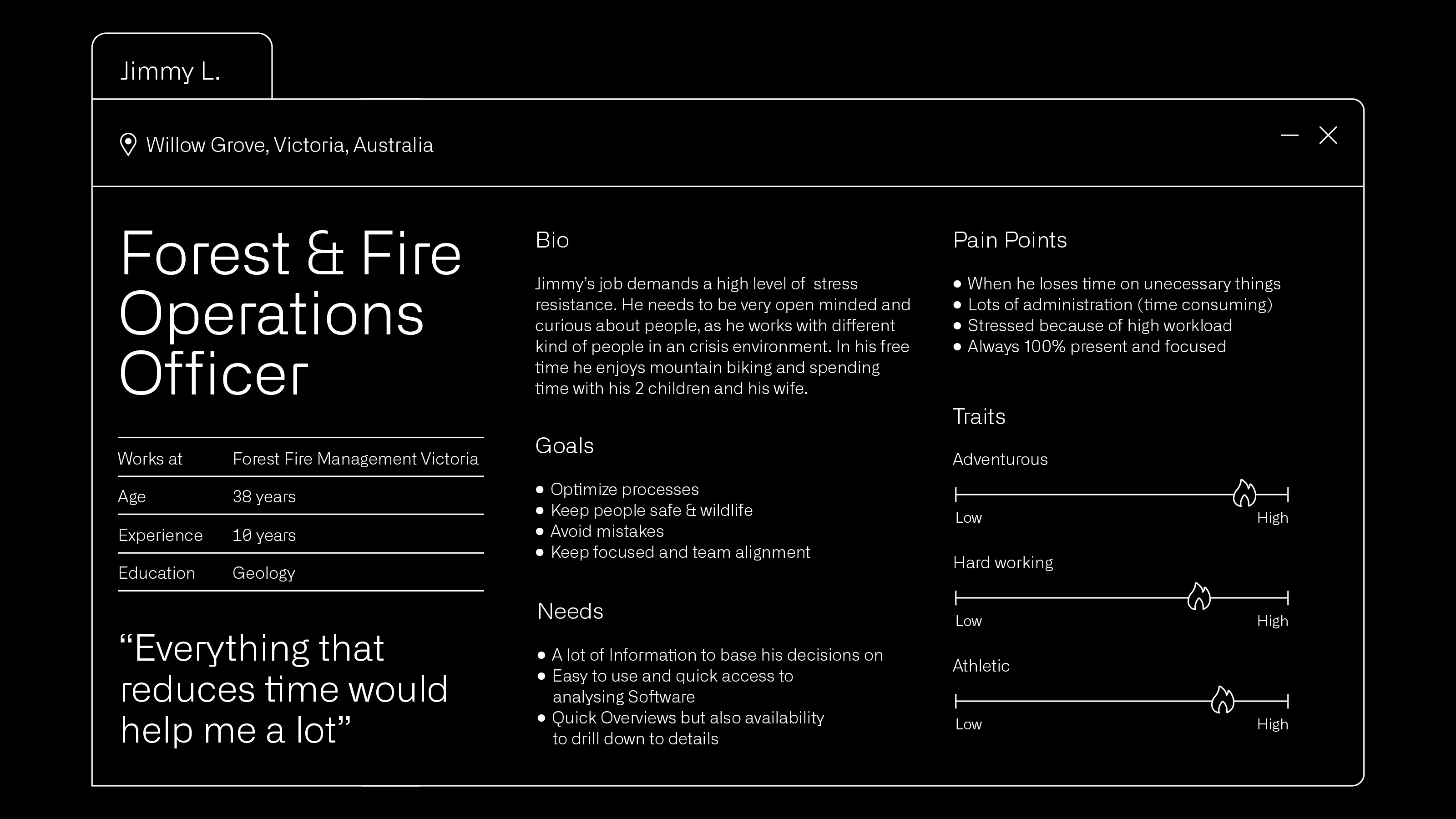
Persona
To help me empathize with the user I synthesized the insights from the interview into a persona. It helped me to understand the user's needs, goals, and traits better.

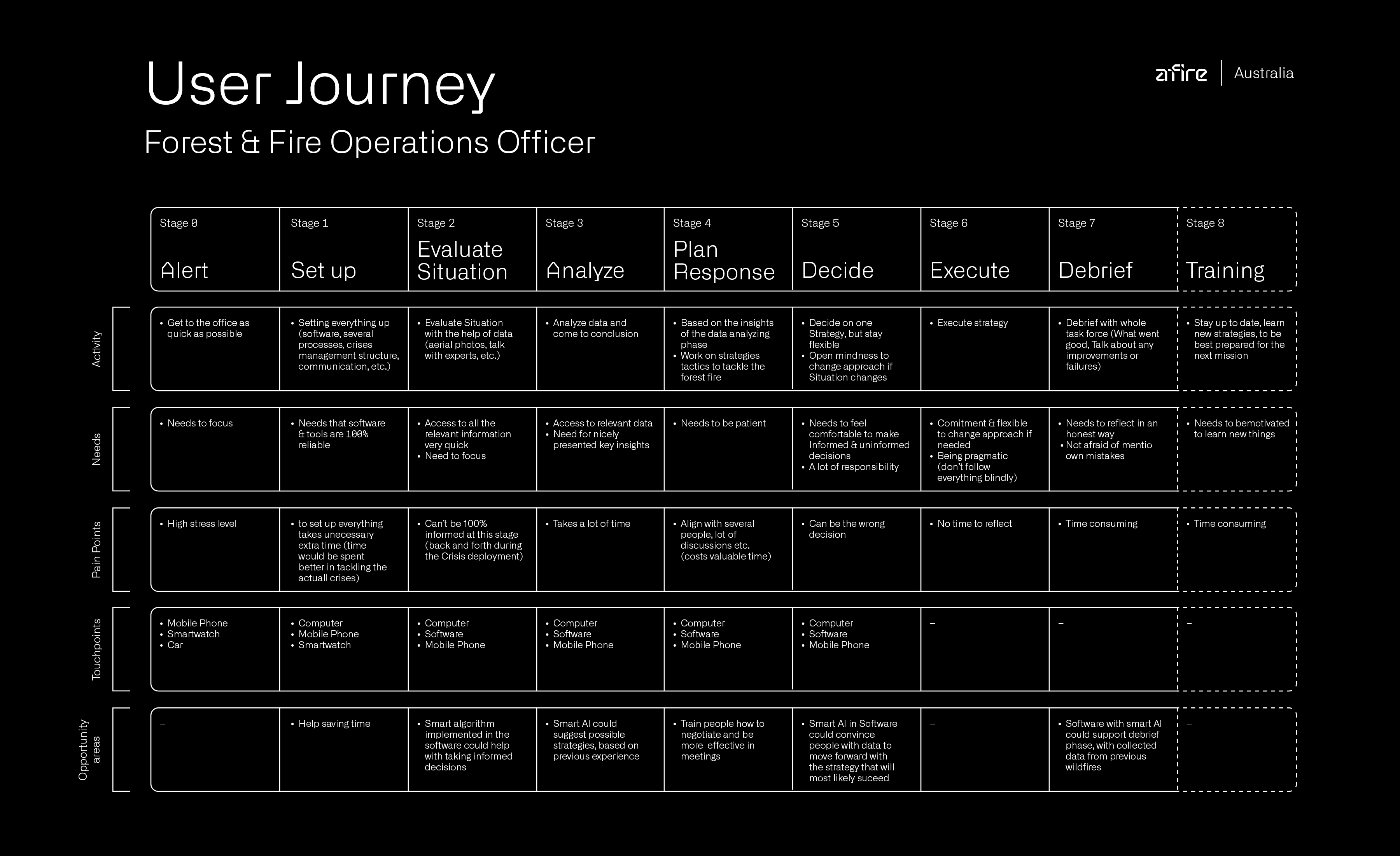
User Journey
Another way to help me get into the users mindset was a user journey. Where I mapped out the current experience. The user journey helped me to identify user needs, pain points and opportunity areas.
After this initial phase I formulated a hypothesis.
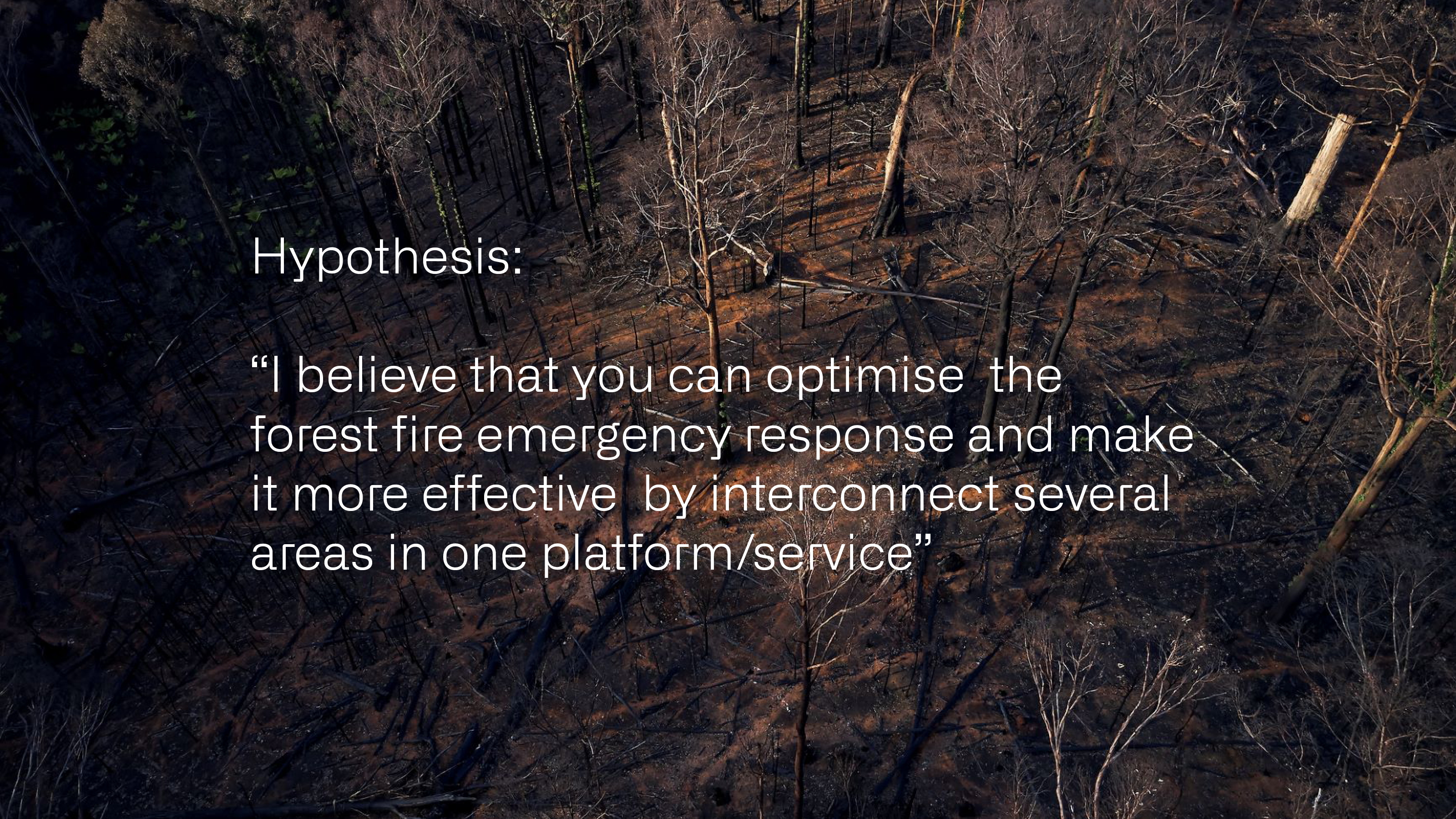
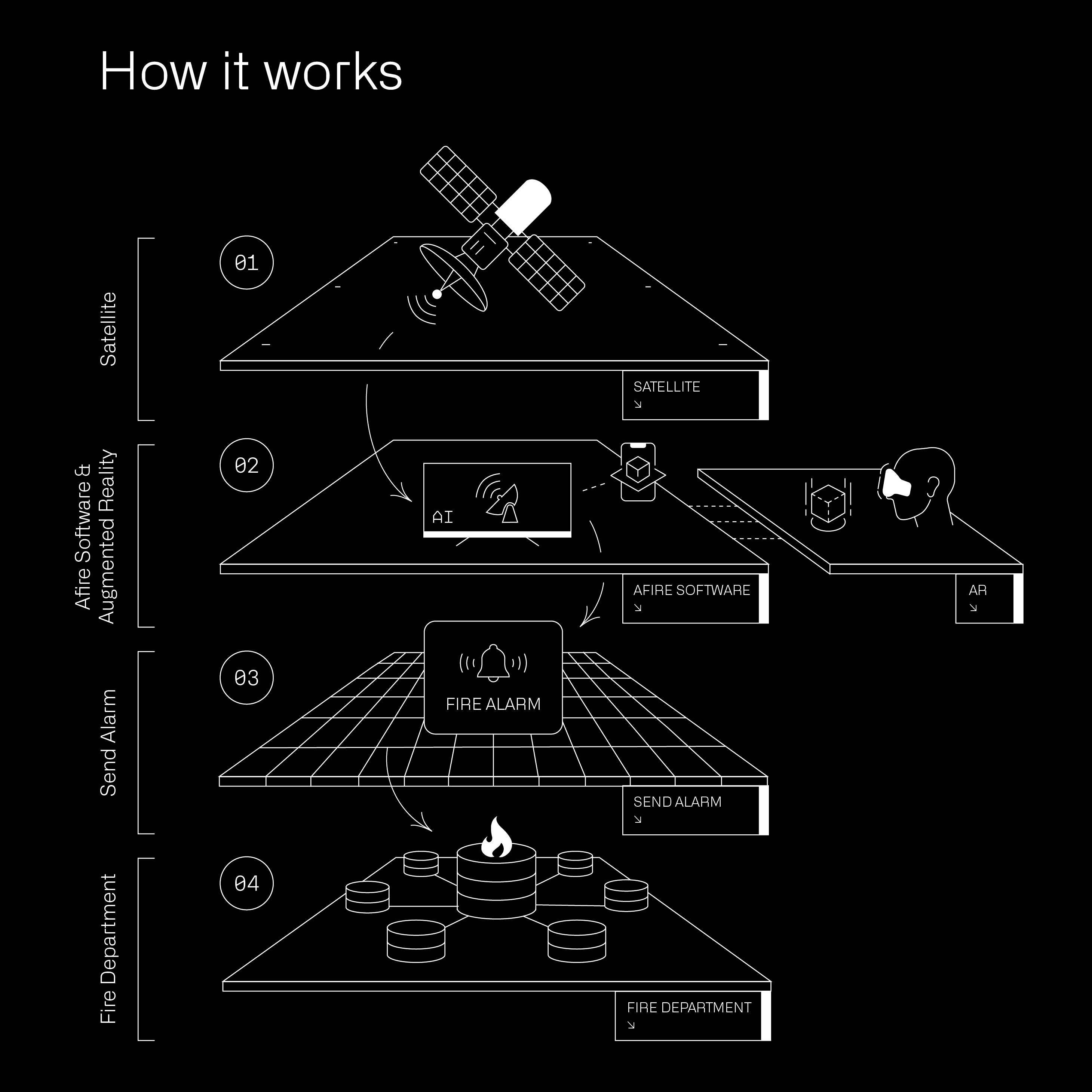
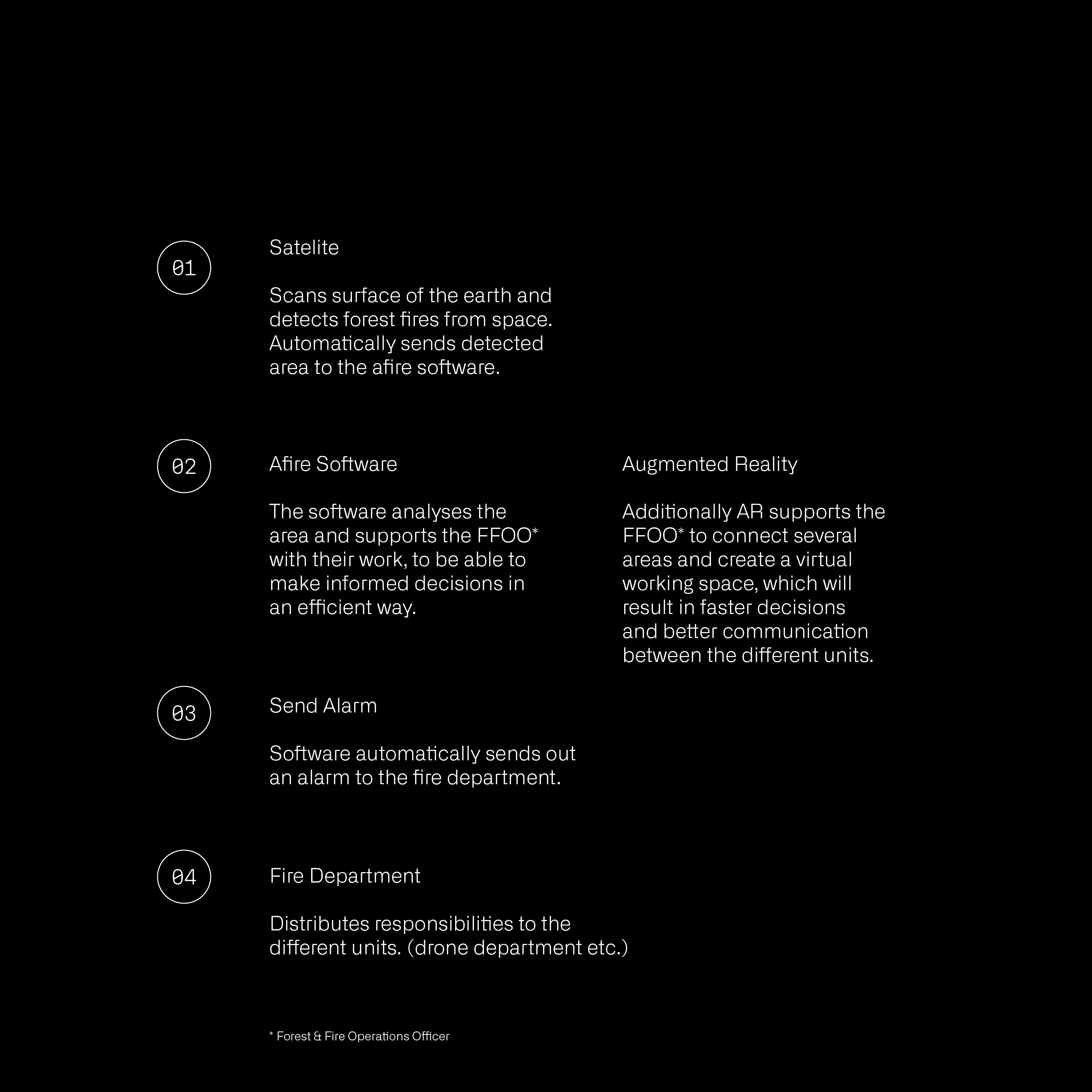
I realised in order to test and validate or refute this hypothesis, I would need a prototype for the overall service. Because of time constraints I decided to make a quick sketch about how the overall concept works and presented it to one of my interviewees. I implemented the feedback and adapted the sketch. The infographic below is the temporary final stage, which shows the overall concept in a convincing way.
The infographic helped me to understand the concept in a more concrete way and also it guided me in the design phase.
First thing I focused on in the design phase was the dashboard/platform which will be the main working tool for the Forest & Fire Operations Officer.
Flowchart
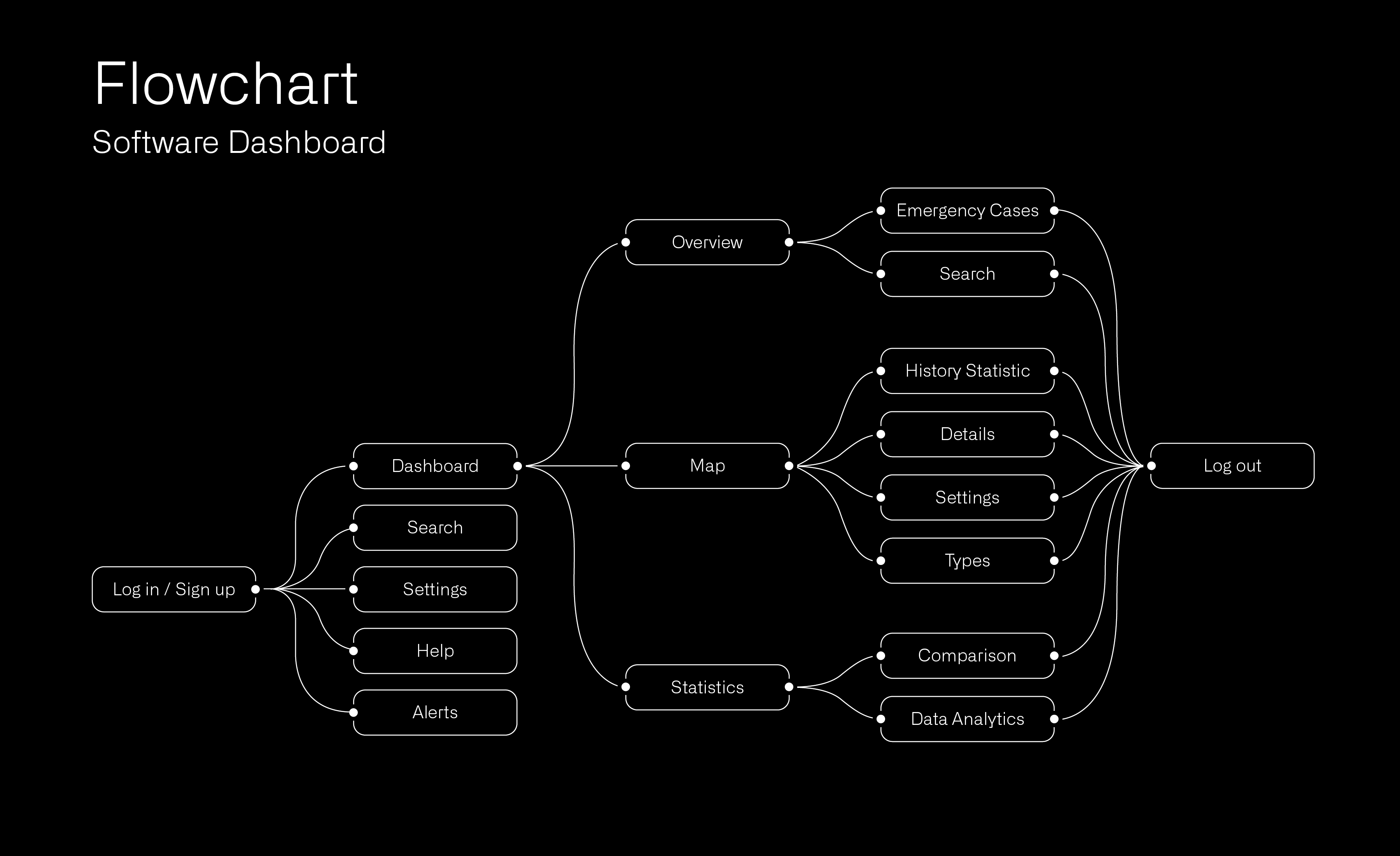
The flowchart helped me to identify the essential steps and also supported me to see the bigger picture for the software.
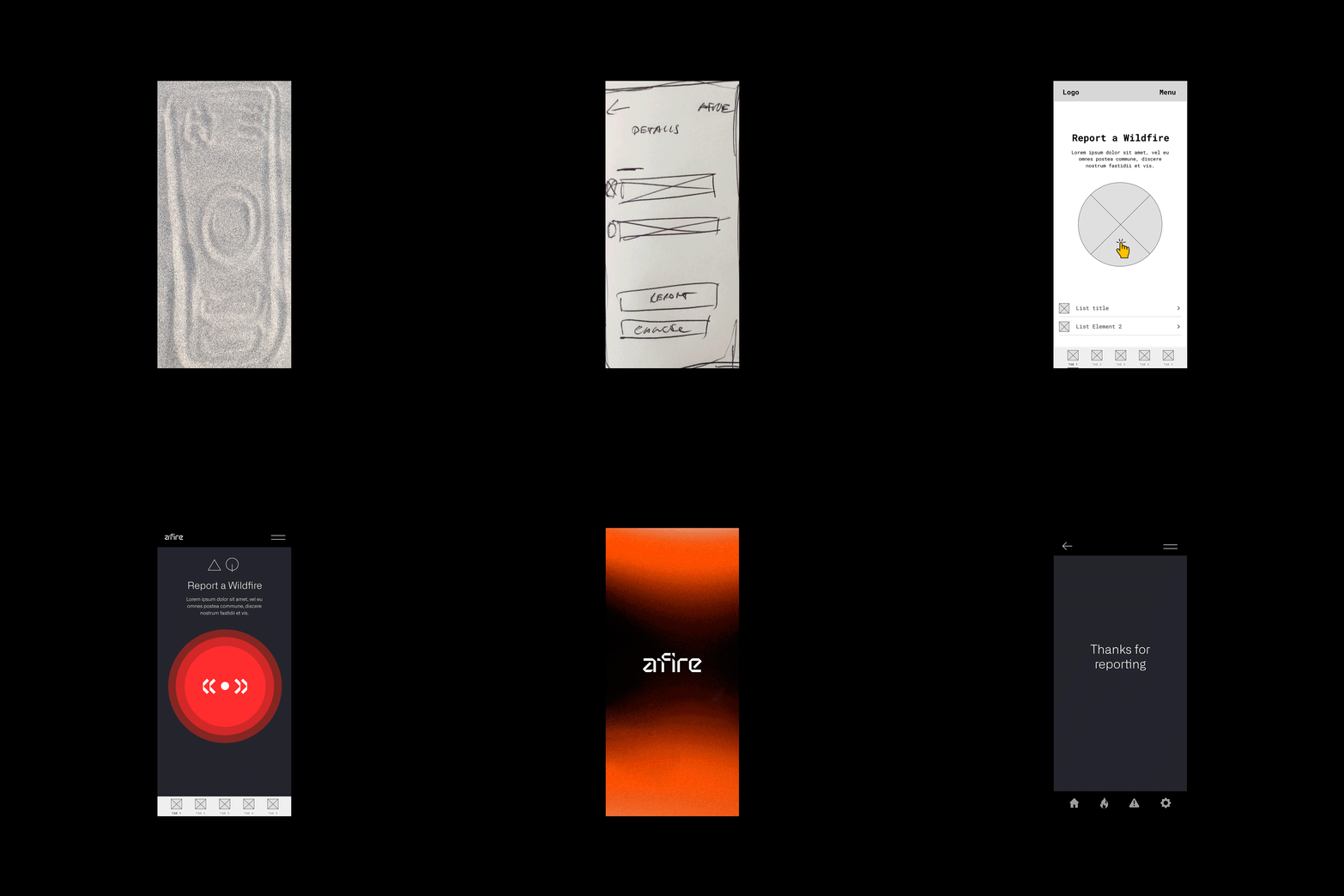
Sketch
After the flowchart I was able to pick one area and start sketching.
My first sketches were on the beach in sand and I continued that later on paper before I translated them into digital wireframes.
Wireframes
The wireframes forced me to be more specific with my sketches and was a logical next step after the sketches. It also was the first thing I could get feedback on, because the sketches were too vague and only I understood what I meant with them. My first test was showing the wireframes to classmates and friends and ask what they think about it. I am aware that this are not the users, but either way I received very insightful feedback which I could implement and build on.
Prototyping
Once I had implemented all the feedback from my previous test. I started to build a clickable low-fi prototype with the goal to test it with the Forest & Fire Operations Officer.

User Testing
Next step in the process was to plan and set up the user testing. First step during the session was to make the interviewee feel comfortable, so I started out with small talk. Then I had the task of letting the user click through the prototype and afterwards I asked how it felt and what he thinks about it and also if he has any things he would improve.
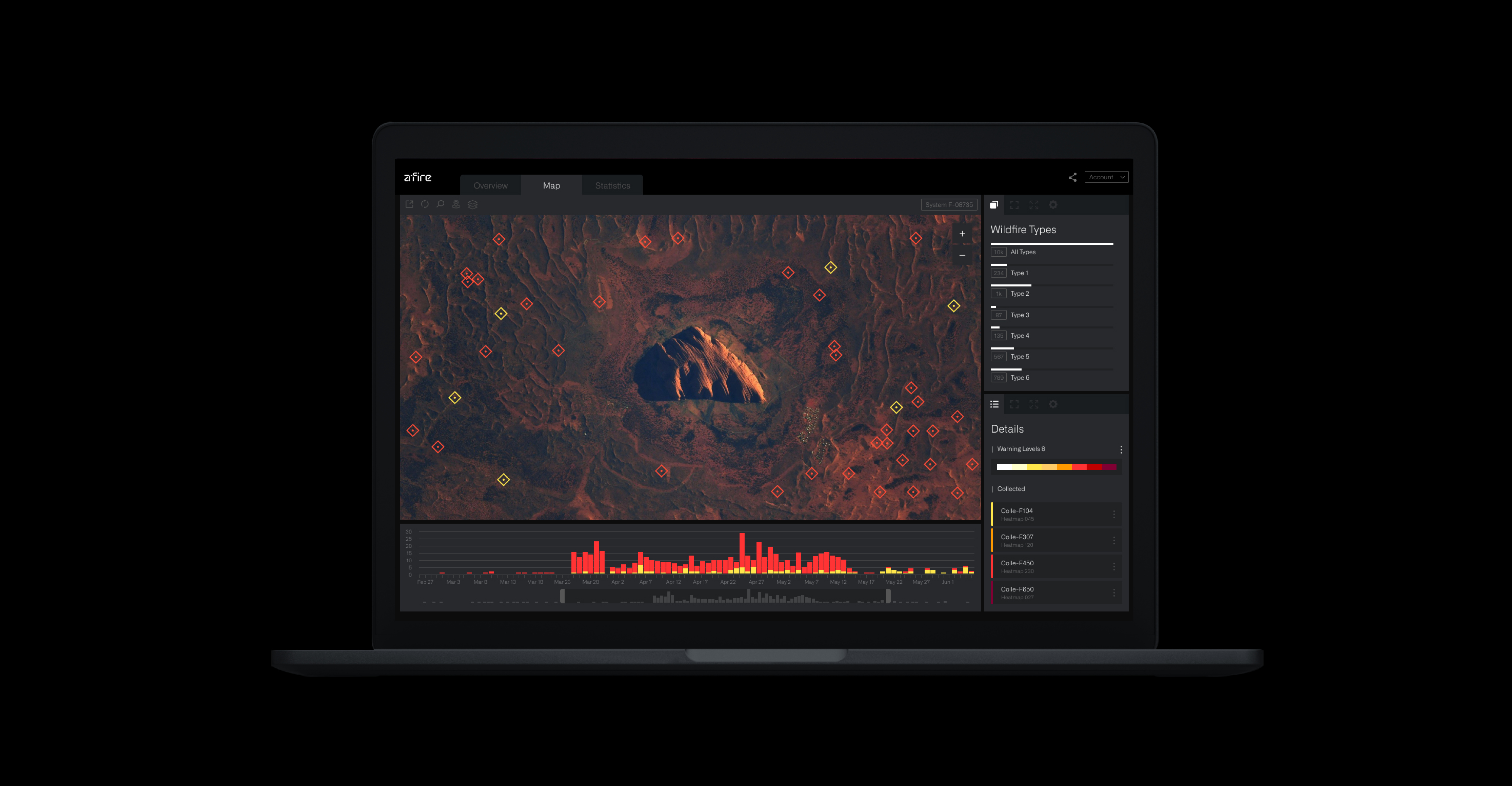
Dashboard
Based on the feedback I started to implement it and parallel I started to build the High-fi Prototype. Unfortunately I did not had the time to test the final High-fi Prototype again.
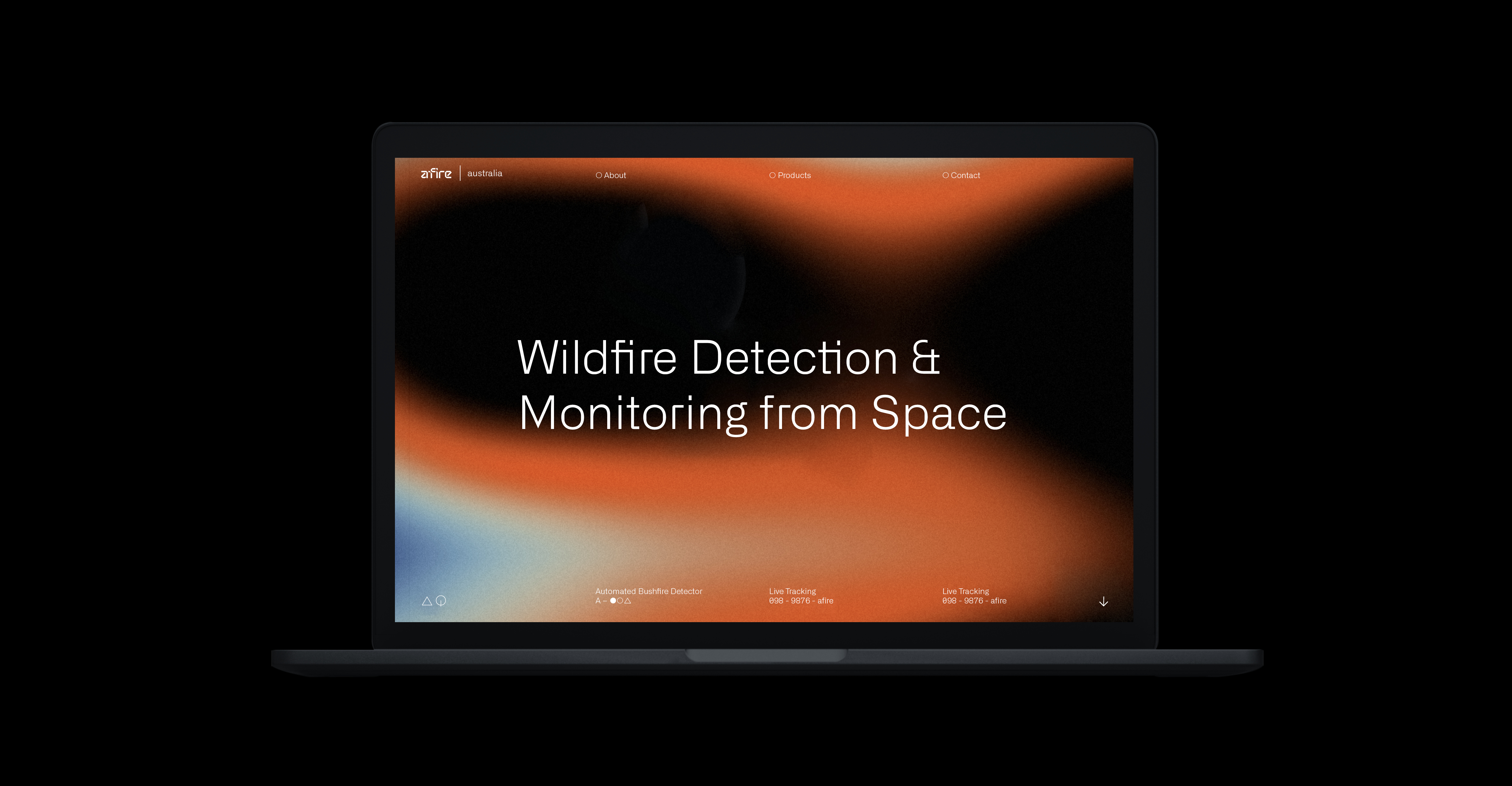
Mobile App
For the mobile version, I pretty much went through the same steps as for the dashboard. Except that I didn’t do any user tests and only asked for feedback from a couple of people. Very important here was also that the user is a different one than for the dashboard. The mobile app is for the general public to report a forest fire while the dashboard is for the expert who is managing the forest fire response.

Augmented Reality
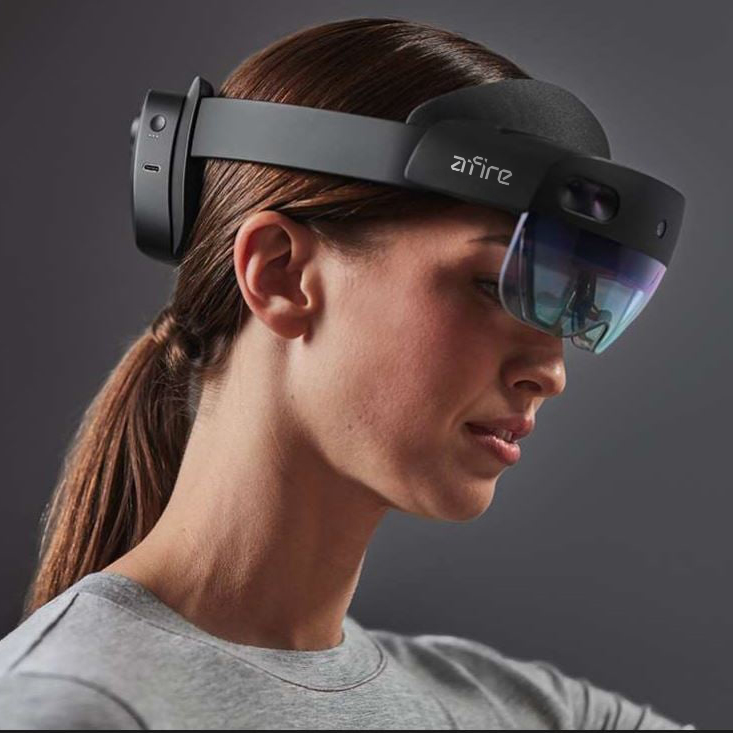
The AR Interface could be a crucial part of simplifying processes as well as supporting the Forest & Fire Operation Officers with their daily tasks. This is only a concept, but I think it clearly shows the future potential and opportunities of AR for forest fire management purposes.
Drone
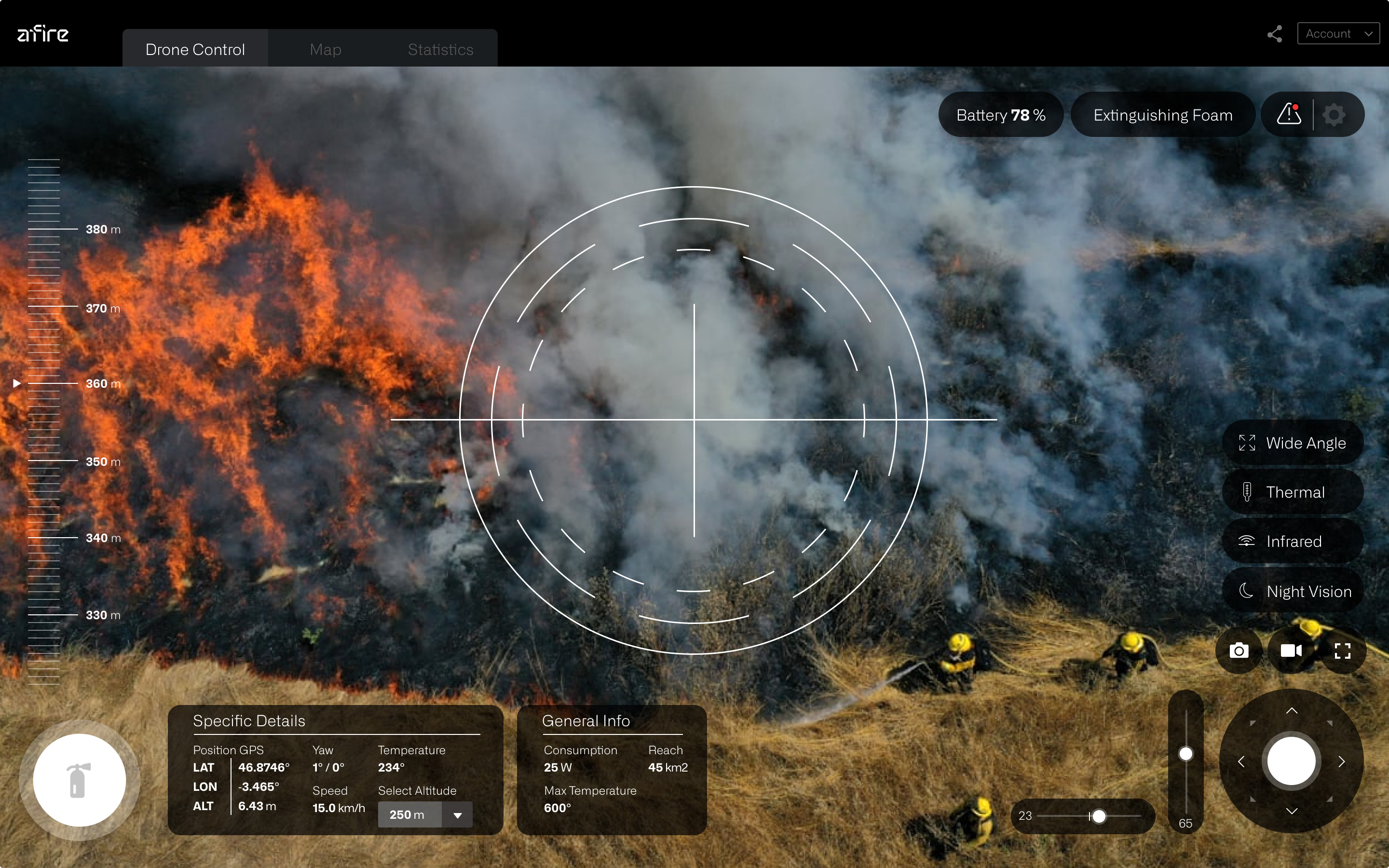
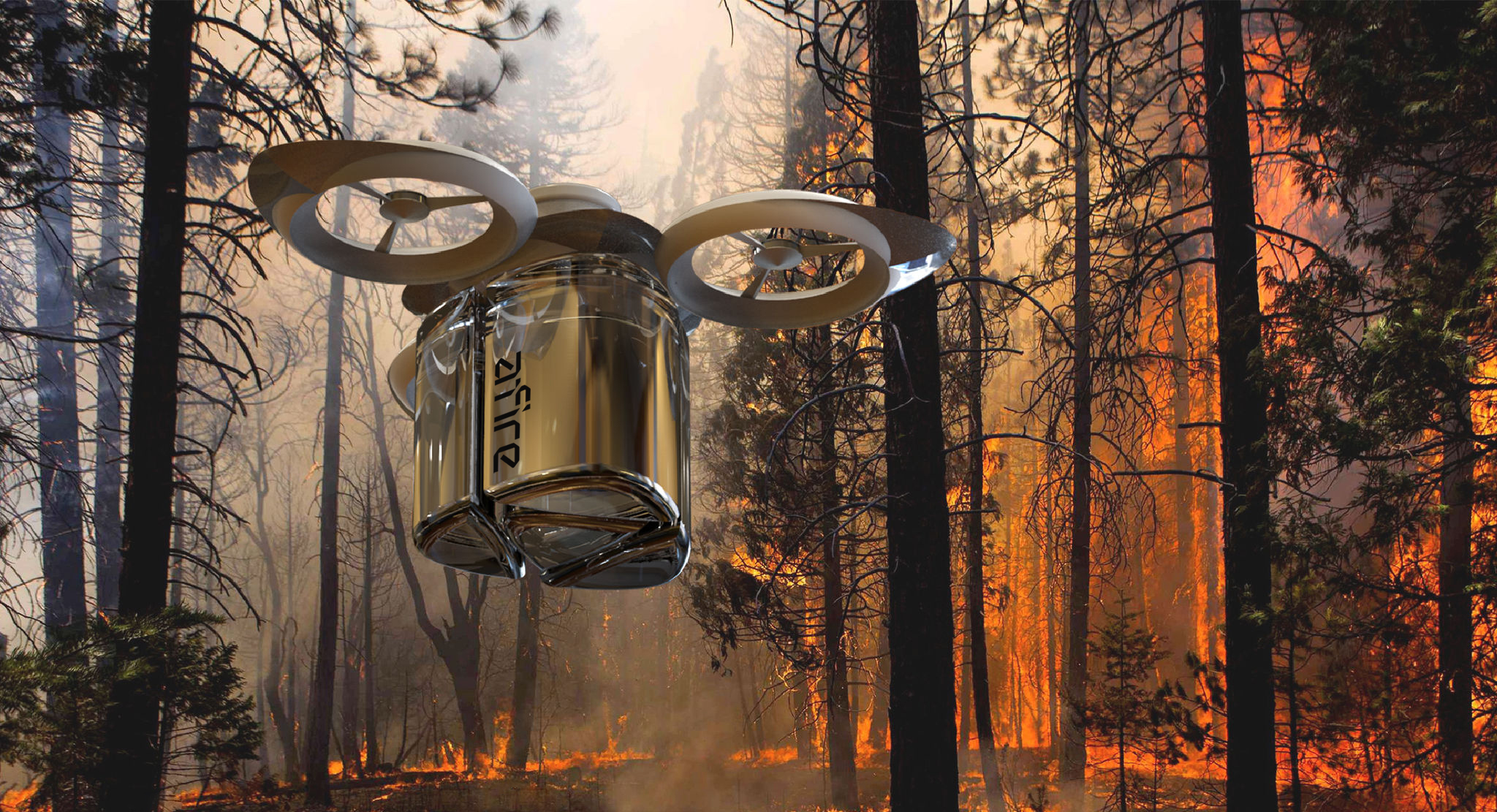
Drones could play a very important role in reaching areas where it is impossible to go for firefighters. The drone controlling system is embedded into the Afire dashboard and allows quick access and an optimized process.
Satellite
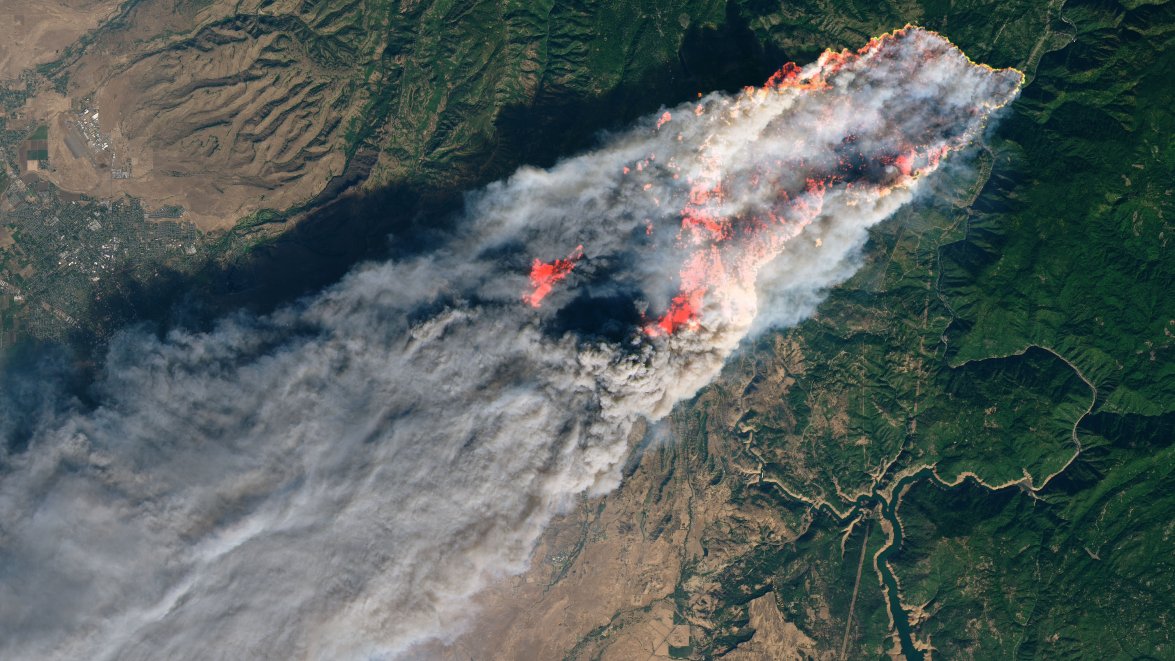
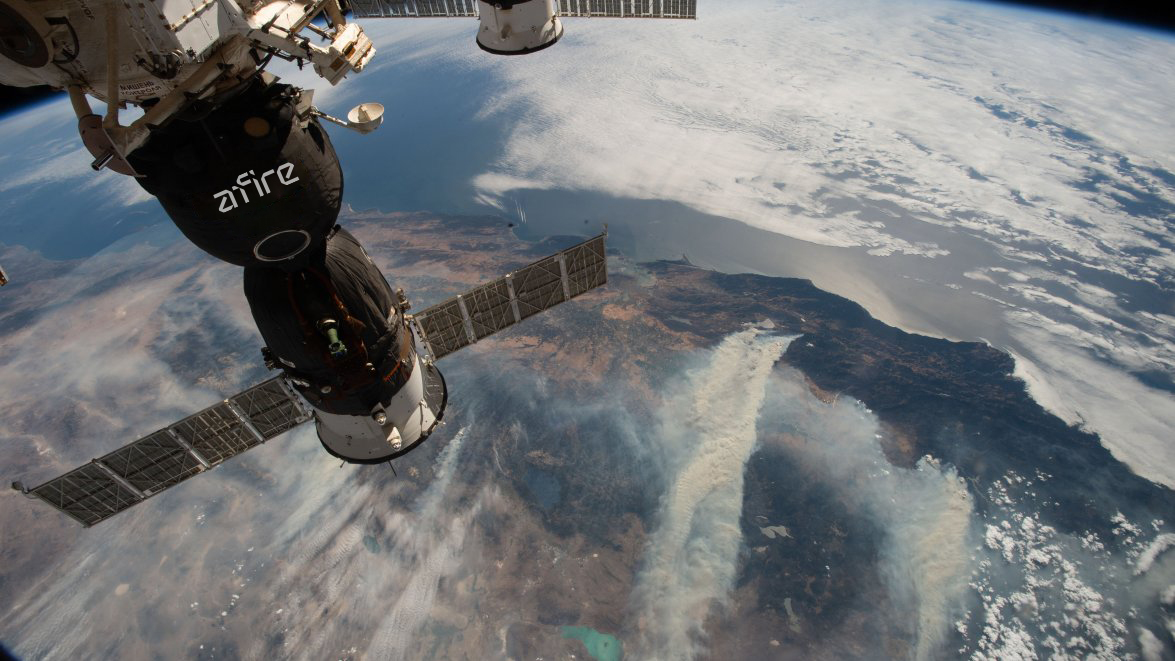
The satellite automatically detects wildfire areas with an integrated infrared sensor. Once detected it sends a notification to the afire software.
Contact